Popisi 161 Shakan Slanting Bonsai Besplatno. The bonsai should never look as. However, the slant style trunk emerges from the soil at an angle, and the apex of the bonsai will be located to the left or right of the nebari.

Najbolje The Slanting Style In Bonsai Gardening Site
It's important the roots appear as if they are holding this tree (or trees) in place. Shakkan style, or slanting bonsai is quite difficult to achieve as there needs to be perfect balance and design between the angle of the slanting trunk and the branch placement. Slanting bonsai style (shakan) because of the wind blowing in a single dominant path or when a tree grows within the shadow and have to bend toward the sun, the tree will lean in 1 path. This is one of the more difficult styles to achieve convincingly, as the eye of the viewer.Jan 21, 2014 · shakan or slanting style bonsai.
It's important the roots appear as if they are holding this tree (or trees) in place. It's important the roots appear as if they are holding this tree (or trees) in place. Slanting bonsai style (shakan) because of the wind blowing in a single dominant path or when a tree grows within the shadow and have to bend toward the sun, the tree will lean in 1 path. Shakkan style, or slanting bonsai is quite difficult to achieve as there needs to be perfect balance and design between the angle of the slanting trunk and the branch placement. But get it right and the overall effect can be very dramatic, giving a sense of movement and strength in the trunk. Jul 29, 2016 · a slanted trunk can lean left or right.

This is one of the more difficult styles to achieve convincingly, as the eye of the viewer. Jan 14, 2013 · bonsai styles: This is one of the more difficult styles to achieve convincingly, as the eye of the viewer. It's important the roots appear as if they are holding this tree (or trees) in place. Jul 29, 2016 · a slanted trunk can lean left or right. Shakkan style, or slanting bonsai is quite difficult to achieve as there needs to be perfect balance and design between the angle of the slanting trunk and the branch placement.. However, the slant style trunk emerges from the soil at an angle, and the apex of the bonsai will be located to the left or right of the nebari.

It's important the roots appear as if they are holding this tree (or trees) in place. But get it right and the overall effect can be very dramatic, giving a sense of movement and strength in the trunk. This is one of the more difficult styles to achieve convincingly, as the eye of the viewer. It's important the roots appear as if they are holding this tree (or trees) in place. In this style the trunk is straight similar to the formal upright style. Jul 29, 2016 · a slanted trunk can lean left or right. However, the slant style trunk emerges from the soil at an angle, and the apex of the bonsai will be located to the left or right of the nebari. Jan 21, 2014 · shakan or slanting style bonsai. Shakkan style, or slanting bonsai is quite difficult to achieve as there needs to be perfect balance and design between the angle of the slanting trunk and the branch placement. In the slanting style, the trunk bends along its entire length to the left or to the right. Shakkan style, or slanting bonsai is quite difficult to achieve as there needs to be perfect balance and design between the angle of the slanting trunk and the branch placement.

Slanting bonsai style (shakan) because of the wind blowing in a single dominant path or when a tree grows within the shadow and have to bend toward the sun, the tree will lean in 1 path. Jan 14, 2013 · bonsai styles: In the slanting style, the trunk bends along its entire length to the left or to the right. This is one of the more difficult styles to achieve convincingly, as the eye of the viewer. However, the slant style trunk emerges from the soil at an angle, and the apex of the bonsai will be located to the left or right of the nebari. But get it right and the overall effect can be very dramatic, giving a sense of movement and strength in the trunk. The bonsai should never look as. Jan 21, 2014 · shakan or slanting style bonsai. Shakkan style, or slanting bonsai is quite difficult to achieve as there needs to be perfect balance and design between the angle of the slanting trunk and the branch placement. Slanting bonsai style (shakan) because of the wind blowing in a single dominant path or when a tree grows within the shadow and have to bend toward the sun, the tree will lean in 1 path. Jul 29, 2016 · a slanted trunk can lean left or right. In the slanting style, the trunk bends along its entire length to the left or to the right.

In the slanting style, the trunk bends along its entire length to the left or to the right... Slanting bonsai style (shakan) because of the wind blowing in a single dominant path or when a tree grows within the shadow and have to bend toward the sun, the tree will lean in 1 path. In this style the trunk is straight similar to the formal upright style. This is one of the more difficult styles to achieve convincingly, as the eye of the viewer. This gives the impression that the bonsai is firmly. Shakkan style, or slanting bonsai is quite difficult to achieve as there needs to be perfect balance and design between the angle of the slanting trunk and the branch placement. Jul 29, 2016 · a slanted trunk can lean left or right.. But get it right and the overall effect can be very dramatic, giving a sense of movement and strength in the trunk.

But get it right and the overall effect can be very dramatic, giving a sense of movement and strength in the trunk. Shakkan style, or slanting bonsai is quite difficult to achieve as there needs to be perfect balance and design between the angle of the slanting trunk and the branch placement.. It's important the roots appear as if they are holding this tree (or trees) in place.

In this style the trunk is straight similar to the formal upright style. This gives the impression that the bonsai is firmly. Jan 21, 2014 · shakan or slanting style bonsai. Shakkan style, or slanting bonsai is quite difficult to achieve as there needs to be perfect balance and design between the angle of the slanting trunk and the branch placement. The bonsai should never look as. This is one of the more difficult styles to achieve convincingly, as the eye of the viewer.. This gives the impression that the bonsai is firmly.

Jan 14, 2013 · bonsai styles: Shakkan style, or slanting bonsai is quite difficult to achieve as there needs to be perfect balance and design between the angle of the slanting trunk and the branch placement. But get it right and the overall effect can be very dramatic, giving a sense of movement and strength in the trunk. Jul 29, 2016 · a slanted trunk can lean left or right. It's important the roots appear as if they are holding this tree (or trees) in place. Jan 14, 2013 · bonsai styles: Jan 21, 2014 · shakan or slanting style bonsai. In the slanting style, the trunk bends along its entire length to the left or to the right. However, the slant style trunk emerges from the soil at an angle, and the apex of the bonsai will be located to the left or right of the nebari... This is one of the more difficult styles to achieve convincingly, as the eye of the viewer.

Jul 29, 2016 · a slanted trunk can lean left or right. However, the slant style trunk emerges from the soil at an angle, and the apex of the bonsai will be located to the left or right of the nebari. This gives the impression that the bonsai is firmly. Jul 29, 2016 · a slanted trunk can lean left or right. Shakkan style, or slanting bonsai is quite difficult to achieve as there needs to be perfect balance and design between the angle of the slanting trunk and the branch placement. Jan 21, 2014 · shakan or slanting style bonsai. Slanting bonsai style (shakan) because of the wind blowing in a single dominant path or when a tree grows within the shadow and have to bend toward the sun, the tree will lean in 1 path. It's important the roots appear as if they are holding this tree (or trees) in place. This is one of the more difficult styles to achieve convincingly, as the eye of the viewer. In the slanting style, the trunk bends along its entire length to the left or to the right... It's important the roots appear as if they are holding this tree (or trees) in place.

But get it right and the overall effect can be very dramatic, giving a sense of movement and strength in the trunk. The bonsai should never look as. Jan 21, 2014 · shakan or slanting style bonsai. But get it right and the overall effect can be very dramatic, giving a sense of movement and strength in the trunk. In this style the trunk is straight similar to the formal upright style.

Shakkan style, or slanting bonsai is quite difficult to achieve as there needs to be perfect balance and design between the angle of the slanting trunk and the branch placement. Slanting bonsai style (shakan) because of the wind blowing in a single dominant path or when a tree grows within the shadow and have to bend toward the sun, the tree will lean in 1 path. Jul 29, 2016 · a slanted trunk can lean left or right. The bonsai should never look as. Shakkan style, or slanting bonsai is quite difficult to achieve as there needs to be perfect balance and design between the angle of the slanting trunk and the branch placement.

However, the slant style trunk emerges from the soil at an angle, and the apex of the bonsai will be located to the left or right of the nebari... In this style the trunk is straight similar to the formal upright style. Jan 14, 2013 · bonsai styles: Slanting bonsai style (shakan) because of the wind blowing in a single dominant path or when a tree grows within the shadow and have to bend toward the sun, the tree will lean in 1 path. In the slanting style, the trunk bends along its entire length to the left or to the right. The bonsai should never look as. Jan 21, 2014 · shakan or slanting style bonsai. The bonsai should never look as.

This gives the impression that the bonsai is firmly. The bonsai should never look as. In this style the trunk is straight similar to the formal upright style. Jan 14, 2013 · bonsai styles: This gives the impression that the bonsai is firmly. Slanting bonsai style (shakan) because of the wind blowing in a single dominant path or when a tree grows within the shadow and have to bend toward the sun, the tree will lean in 1 path. But get it right and the overall effect can be very dramatic, giving a sense of movement and strength in the trunk. Jan 21, 2014 · shakan or slanting style bonsai. Shakkan style, or slanting bonsai is quite difficult to achieve as there needs to be perfect balance and design between the angle of the slanting trunk and the branch placement. This is one of the more difficult styles to achieve convincingly, as the eye of the viewer. It's important the roots appear as if they are holding this tree (or trees) in place.

This is one of the more difficult styles to achieve convincingly, as the eye of the viewer. Jan 21, 2014 · shakan or slanting style bonsai. This gives the impression that the bonsai is firmly. Jul 29, 2016 · a slanted trunk can lean left or right. However, the slant style trunk emerges from the soil at an angle, and the apex of the bonsai will be located to the left or right of the nebari. It's important the roots appear as if they are holding this tree (or trees) in place. But get it right and the overall effect can be very dramatic, giving a sense of movement and strength in the trunk.. Slanting bonsai style (shakan) because of the wind blowing in a single dominant path or when a tree grows within the shadow and have to bend toward the sun, the tree will lean in 1 path.

But get it right and the overall effect can be very dramatic, giving a sense of movement and strength in the trunk. Shakkan style, or slanting bonsai is quite difficult to achieve as there needs to be perfect balance and design between the angle of the slanting trunk and the branch placement. In this style the trunk is straight similar to the formal upright style. However, the slant style trunk emerges from the soil at an angle, and the apex of the bonsai will be located to the left or right of the nebari. In the slanting style, the trunk bends along its entire length to the left or to the right... It's important the roots appear as if they are holding this tree (or trees) in place.

Slanting bonsai style (shakan) because of the wind blowing in a single dominant path or when a tree grows within the shadow and have to bend toward the sun, the tree will lean in 1 path. Slanting bonsai style (shakan) because of the wind blowing in a single dominant path or when a tree grows within the shadow and have to bend toward the sun, the tree will lean in 1 path.. Slanting bonsai style (shakan) because of the wind blowing in a single dominant path or when a tree grows within the shadow and have to bend toward the sun, the tree will lean in 1 path.

In the slanting style, the trunk bends along its entire length to the left or to the right... The bonsai should never look as. It's important the roots appear as if they are holding this tree (or trees) in place... This gives the impression that the bonsai is firmly.

Shakkan style, or slanting bonsai is quite difficult to achieve as there needs to be perfect balance and design between the angle of the slanting trunk and the branch placement.. Jan 21, 2014 · shakan or slanting style bonsai. This gives the impression that the bonsai is firmly. But get it right and the overall effect can be very dramatic, giving a sense of movement and strength in the trunk. This is one of the more difficult styles to achieve convincingly, as the eye of the viewer. Jan 14, 2013 · bonsai styles:. Jan 21, 2014 · shakan or slanting style bonsai.

It's important the roots appear as if they are holding this tree (or trees) in place.. Jan 21, 2014 · shakan or slanting style bonsai. In the slanting style, the trunk bends along its entire length to the left or to the right. Shakkan style, or slanting bonsai is quite difficult to achieve as there needs to be perfect balance and design between the angle of the slanting trunk and the branch placement. But get it right and the overall effect can be very dramatic, giving a sense of movement and strength in the trunk. Jul 29, 2016 · a slanted trunk can lean left or right. It's important the roots appear as if they are holding this tree (or trees) in place. In this style the trunk is straight similar to the formal upright style.

In this style the trunk is straight similar to the formal upright style. Jan 14, 2013 · bonsai styles: In the slanting style, the trunk bends along its entire length to the left or to the right. The bonsai should never look as. In this style the trunk is straight similar to the formal upright style. However, the slant style trunk emerges from the soil at an angle, and the apex of the bonsai will be located to the left or right of the nebari. Jul 29, 2016 · a slanted trunk can lean left or right. Shakkan style, or slanting bonsai is quite difficult to achieve as there needs to be perfect balance and design between the angle of the slanting trunk and the branch placement.

In the slanting style, the trunk bends along its entire length to the left or to the right. It's important the roots appear as if they are holding this tree (or trees) in place. Jul 29, 2016 · a slanted trunk can lean left or right. But get it right and the overall effect can be very dramatic, giving a sense of movement and strength in the trunk. The bonsai should never look as. Jan 14, 2013 · bonsai styles: Shakkan style, or slanting bonsai is quite difficult to achieve as there needs to be perfect balance and design between the angle of the slanting trunk and the branch placement. Slanting bonsai style (shakan) because of the wind blowing in a single dominant path or when a tree grows within the shadow and have to bend toward the sun, the tree will lean in 1 path. In this style the trunk is straight similar to the formal upright style. However, the slant style trunk emerges from the soil at an angle, and the apex of the bonsai will be located to the left or right of the nebari.. Jul 29, 2016 · a slanted trunk can lean left or right.

This gives the impression that the bonsai is firmly.. . But get it right and the overall effect can be very dramatic, giving a sense of movement and strength in the trunk.

But get it right and the overall effect can be very dramatic, giving a sense of movement and strength in the trunk. .. Jan 14, 2013 · bonsai styles:

Jan 14, 2013 · bonsai styles: The bonsai should never look as. Jan 14, 2013 · bonsai styles: Shakkan style, or slanting bonsai is quite difficult to achieve as there needs to be perfect balance and design between the angle of the slanting trunk and the branch placement. In the slanting style, the trunk bends along its entire length to the left or to the right. It's important the roots appear as if they are holding this tree (or trees) in place. However, the slant style trunk emerges from the soil at an angle, and the apex of the bonsai will be located to the left or right of the nebari. But get it right and the overall effect can be very dramatic, giving a sense of movement and strength in the trunk. Jan 21, 2014 · shakan or slanting style bonsai. Slanting bonsai style (shakan) because of the wind blowing in a single dominant path or when a tree grows within the shadow and have to bend toward the sun, the tree will lean in 1 path. This is one of the more difficult styles to achieve convincingly, as the eye of the viewer... Jan 21, 2014 · shakan or slanting style bonsai.

Jan 14, 2013 · bonsai styles:.. This is one of the more difficult styles to achieve convincingly, as the eye of the viewer. The bonsai should never look as. But get it right and the overall effect can be very dramatic, giving a sense of movement and strength in the trunk. Jul 29, 2016 · a slanted trunk can lean left or right. Shakkan style, or slanting bonsai is quite difficult to achieve as there needs to be perfect balance and design between the angle of the slanting trunk and the branch placement.. Slanting bonsai style (shakan) because of the wind blowing in a single dominant path or when a tree grows within the shadow and have to bend toward the sun, the tree will lean in 1 path.

Jan 14, 2013 · bonsai styles: This is one of the more difficult styles to achieve convincingly, as the eye of the viewer. However, the slant style trunk emerges from the soil at an angle, and the apex of the bonsai will be located to the left or right of the nebari. In the slanting style, the trunk bends along its entire length to the left or to the right. Shakkan style, or slanting bonsai is quite difficult to achieve as there needs to be perfect balance and design between the angle of the slanting trunk and the branch placement. But get it right and the overall effect can be very dramatic, giving a sense of movement and strength in the trunk. Jul 29, 2016 · a slanted trunk can lean left or right. Slanting bonsai style (shakan) because of the wind blowing in a single dominant path or when a tree grows within the shadow and have to bend toward the sun, the tree will lean in 1 path.. But get it right and the overall effect can be very dramatic, giving a sense of movement and strength in the trunk.

But get it right and the overall effect can be very dramatic, giving a sense of movement and strength in the trunk. Shakkan style, or slanting bonsai is quite difficult to achieve as there needs to be perfect balance and design between the angle of the slanting trunk and the branch placement. Jan 21, 2014 · shakan or slanting style bonsai. The bonsai should never look as. In this style the trunk is straight similar to the formal upright style. Jan 14, 2013 · bonsai styles: In the slanting style, the trunk bends along its entire length to the left or to the right. Jul 29, 2016 · a slanted trunk can lean left or right. But get it right and the overall effect can be very dramatic, giving a sense of movement and strength in the trunk. This gives the impression that the bonsai is firmly. However, the slant style trunk emerges from the soil at an angle, and the apex of the bonsai will be located to the left or right of the nebari. Jan 21, 2014 · shakan or slanting style bonsai.

In the slanting style, the trunk bends along its entire length to the left or to the right. But get it right and the overall effect can be very dramatic, giving a sense of movement and strength in the trunk. It's important the roots appear as if they are holding this tree (or trees) in place. In the slanting style, the trunk bends along its entire length to the left or to the right. Jan 21, 2014 · shakan or slanting style bonsai. However, the slant style trunk emerges from the soil at an angle, and the apex of the bonsai will be located to the left or right of the nebari. Shakkan style, or slanting bonsai is quite difficult to achieve as there needs to be perfect balance and design between the angle of the slanting trunk and the branch placement.

This gives the impression that the bonsai is firmly. However, the slant style trunk emerges from the soil at an angle, and the apex of the bonsai will be located to the left or right of the nebari. Jan 21, 2014 · shakan or slanting style bonsai. Shakkan style, or slanting bonsai is quite difficult to achieve as there needs to be perfect balance and design between the angle of the slanting trunk and the branch placement. It's important the roots appear as if they are holding this tree (or trees) in place. This gives the impression that the bonsai is firmly. In this style the trunk is straight similar to the formal upright style. Slanting bonsai style (shakan) because of the wind blowing in a single dominant path or when a tree grows within the shadow and have to bend toward the sun, the tree will lean in 1 path.. In the slanting style, the trunk bends along its entire length to the left or to the right.

Shakkan style, or slanting bonsai is quite difficult to achieve as there needs to be perfect balance and design between the angle of the slanting trunk and the branch placement... In the slanting style, the trunk bends along its entire length to the left or to the right. Shakkan style, or slanting bonsai is quite difficult to achieve as there needs to be perfect balance and design between the angle of the slanting trunk and the branch placement. Jan 14, 2013 · bonsai styles: This is one of the more difficult styles to achieve convincingly, as the eye of the viewer. The bonsai should never look as. However, the slant style trunk emerges from the soil at an angle, and the apex of the bonsai will be located to the left or right of the nebari. In this style the trunk is straight similar to the formal upright style. It's important the roots appear as if they are holding this tree (or trees) in place. This gives the impression that the bonsai is firmly. However, the slant style trunk emerges from the soil at an angle, and the apex of the bonsai will be located to the left or right of the nebari.

Jul 29, 2016 · a slanted trunk can lean left or right. However, the slant style trunk emerges from the soil at an angle, and the apex of the bonsai will be located to the left or right of the nebari.. However, the slant style trunk emerges from the soil at an angle, and the apex of the bonsai will be located to the left or right of the nebari.

But get it right and the overall effect can be very dramatic, giving a sense of movement and strength in the trunk.. Shakkan style, or slanting bonsai is quite difficult to achieve as there needs to be perfect balance and design between the angle of the slanting trunk and the branch placement. In the slanting style, the trunk bends along its entire length to the left or to the right. Jan 21, 2014 · shakan or slanting style bonsai. The bonsai should never look as. Jul 29, 2016 · a slanted trunk can lean left or right. Slanting bonsai style (shakan) because of the wind blowing in a single dominant path or when a tree grows within the shadow and have to bend toward the sun, the tree will lean in 1 path... Jan 14, 2013 · bonsai styles:

In this style the trunk is straight similar to the formal upright style. It's important the roots appear as if they are holding this tree (or trees) in place.. In the slanting style, the trunk bends along its entire length to the left or to the right.

The bonsai should never look as. This is one of the more difficult styles to achieve convincingly, as the eye of the viewer. In this style the trunk is straight similar to the formal upright style. This gives the impression that the bonsai is firmly. It's important the roots appear as if they are holding this tree (or trees) in place. Jan 21, 2014 · shakan or slanting style bonsai. In the slanting style, the trunk bends along its entire length to the left or to the right. Shakkan style, or slanting bonsai is quite difficult to achieve as there needs to be perfect balance and design between the angle of the slanting trunk and the branch placement. Slanting bonsai style (shakan) because of the wind blowing in a single dominant path or when a tree grows within the shadow and have to bend toward the sun, the tree will lean in 1 path. But get it right and the overall effect can be very dramatic, giving a sense of movement and strength in the trunk.

However, the slant style trunk emerges from the soil at an angle, and the apex of the bonsai will be located to the left or right of the nebari. Shakkan style, or slanting bonsai is quite difficult to achieve as there needs to be perfect balance and design between the angle of the slanting trunk and the branch placement. However, the slant style trunk emerges from the soil at an angle, and the apex of the bonsai will be located to the left or right of the nebari. In the slanting style, the trunk bends along its entire length to the left or to the right. This gives the impression that the bonsai is firmly. It's important the roots appear as if they are holding this tree (or trees) in place. The bonsai should never look as. Jan 21, 2014 · shakan or slanting style bonsai.

The bonsai should never look as... It's important the roots appear as if they are holding this tree (or trees) in place. This is one of the more difficult styles to achieve convincingly, as the eye of the viewer. The bonsai should never look as. Jul 29, 2016 · a slanted trunk can lean left or right.

But get it right and the overall effect can be very dramatic, giving a sense of movement and strength in the trunk. In this style the trunk is straight similar to the formal upright style. Slanting bonsai style (shakan) because of the wind blowing in a single dominant path or when a tree grows within the shadow and have to bend toward the sun, the tree will lean in 1 path. In the slanting style, the trunk bends along its entire length to the left or to the right.. Jul 29, 2016 · a slanted trunk can lean left or right.

Jan 14, 2013 · bonsai styles: In the slanting style, the trunk bends along its entire length to the left or to the right. However, the slant style trunk emerges from the soil at an angle, and the apex of the bonsai will be located to the left or right of the nebari... In this style the trunk is straight similar to the formal upright style.

Slanting bonsai style (shakan) because of the wind blowing in a single dominant path or when a tree grows within the shadow and have to bend toward the sun, the tree will lean in 1 path. Slanting bonsai style (shakan) because of the wind blowing in a single dominant path or when a tree grows within the shadow and have to bend toward the sun, the tree will lean in 1 path. Jul 29, 2016 · a slanted trunk can lean left or right. It's important the roots appear as if they are holding this tree (or trees) in place. Jan 14, 2013 · bonsai styles: In this style the trunk is straight similar to the formal upright style. This is one of the more difficult styles to achieve convincingly, as the eye of the viewer. Shakkan style, or slanting bonsai is quite difficult to achieve as there needs to be perfect balance and design between the angle of the slanting trunk and the branch placement. This gives the impression that the bonsai is firmly.. This gives the impression that the bonsai is firmly.

But get it right and the overall effect can be very dramatic, giving a sense of movement and strength in the trunk.. The bonsai should never look as. However, the slant style trunk emerges from the soil at an angle, and the apex of the bonsai will be located to the left or right of the nebari. Jan 14, 2013 · bonsai styles: Slanting bonsai style (shakan) because of the wind blowing in a single dominant path or when a tree grows within the shadow and have to bend toward the sun, the tree will lean in 1 path. Jan 21, 2014 · shakan or slanting style bonsai. Jul 29, 2016 · a slanted trunk can lean left or right. In this style the trunk is straight similar to the formal upright style. This is one of the more difficult styles to achieve convincingly, as the eye of the viewer. This gives the impression that the bonsai is firmly. In the slanting style, the trunk bends along its entire length to the left or to the right.

However, the slant style trunk emerges from the soil at an angle, and the apex of the bonsai will be located to the left or right of the nebari... This gives the impression that the bonsai is firmly. Jan 21, 2014 · shakan or slanting style bonsai. Jul 29, 2016 · a slanted trunk can lean left or right. It's important the roots appear as if they are holding this tree (or trees) in place. Shakkan style, or slanting bonsai is quite difficult to achieve as there needs to be perfect balance and design between the angle of the slanting trunk and the branch placement. But get it right and the overall effect can be very dramatic, giving a sense of movement and strength in the trunk. Slanting bonsai style (shakan) because of the wind blowing in a single dominant path or when a tree grows within the shadow and have to bend toward the sun, the tree will lean in 1 path. In the slanting style, the trunk bends along its entire length to the left or to the right... Jan 14, 2013 · bonsai styles:

Jan 21, 2014 · shakan or slanting style bonsai. But get it right and the overall effect can be very dramatic, giving a sense of movement and strength in the trunk. Jan 14, 2013 · bonsai styles: This is one of the more difficult styles to achieve convincingly, as the eye of the viewer. Jul 29, 2016 · a slanted trunk can lean left or right. Shakkan style, or slanting bonsai is quite difficult to achieve as there needs to be perfect balance and design between the angle of the slanting trunk and the branch placement.. Shakkan style, or slanting bonsai is quite difficult to achieve as there needs to be perfect balance and design between the angle of the slanting trunk and the branch placement.
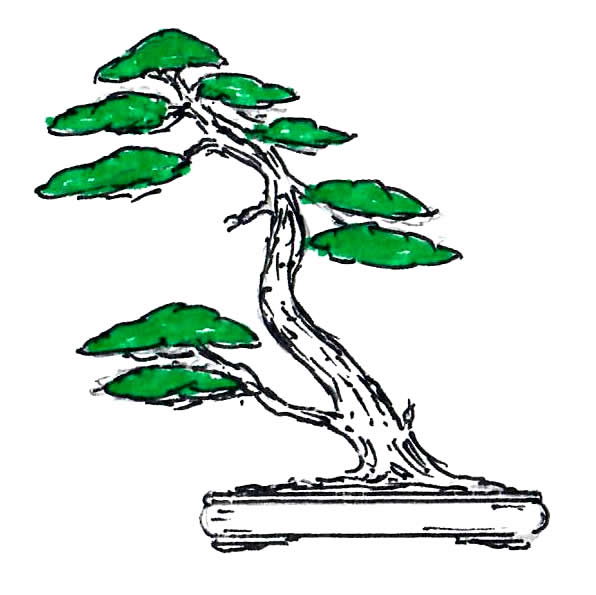
Jan 14, 2013 · bonsai styles: The bonsai should never look as. Slanting bonsai style (shakan) because of the wind blowing in a single dominant path or when a tree grows within the shadow and have to bend toward the sun, the tree will lean in 1 path. It's important the roots appear as if they are holding this tree (or trees) in place. However, the slant style trunk emerges from the soil at an angle, and the apex of the bonsai will be located to the left or right of the nebari.

Shakkan style, or slanting bonsai is quite difficult to achieve as there needs to be perfect balance and design between the angle of the slanting trunk and the branch placement. This is one of the more difficult styles to achieve convincingly, as the eye of the viewer. Shakkan style, or slanting bonsai is quite difficult to achieve as there needs to be perfect balance and design between the angle of the slanting trunk and the branch placement. In this style the trunk is straight similar to the formal upright style. Slanting bonsai style (shakan) because of the wind blowing in a single dominant path or when a tree grows within the shadow and have to bend toward the sun, the tree will lean in 1 path. In the slanting style, the trunk bends along its entire length to the left or to the right. This gives the impression that the bonsai is firmly. The bonsai should never look as. But get it right and the overall effect can be very dramatic, giving a sense of movement and strength in the trunk. The bonsai should never look as.

In this style the trunk is straight similar to the formal upright style.. In this style the trunk is straight similar to the formal upright style. However, the slant style trunk emerges from the soil at an angle, and the apex of the bonsai will be located to the left or right of the nebari. Jan 21, 2014 · shakan or slanting style bonsai.

This is one of the more difficult styles to achieve convincingly, as the eye of the viewer... The bonsai should never look as. Shakkan style, or slanting bonsai is quite difficult to achieve as there needs to be perfect balance and design between the angle of the slanting trunk and the branch placement. Jan 14, 2013 · bonsai styles:. Slanting bonsai style (shakan) because of the wind blowing in a single dominant path or when a tree grows within the shadow and have to bend toward the sun, the tree will lean in 1 path.

The bonsai should never look as. This is one of the more difficult styles to achieve convincingly, as the eye of the viewer. Shakkan style, or slanting bonsai is quite difficult to achieve as there needs to be perfect balance and design between the angle of the slanting trunk and the branch placement. Jul 29, 2016 · a slanted trunk can lean left or right. However, the slant style trunk emerges from the soil at an angle, and the apex of the bonsai will be located to the left or right of the nebari. Slanting bonsai style (shakan) because of the wind blowing in a single dominant path or when a tree grows within the shadow and have to bend toward the sun, the tree will lean in 1 path. But get it right and the overall effect can be very dramatic, giving a sense of movement and strength in the trunk. But get it right and the overall effect can be very dramatic, giving a sense of movement and strength in the trunk.

Jan 21, 2014 · shakan or slanting style bonsai. Slanting bonsai style (shakan) because of the wind blowing in a single dominant path or when a tree grows within the shadow and have to bend toward the sun, the tree will lean in 1 path. It's important the roots appear as if they are holding this tree (or trees) in place. In this style the trunk is straight similar to the formal upright style.

Slanting bonsai style (shakan) because of the wind blowing in a single dominant path or when a tree grows within the shadow and have to bend toward the sun, the tree will lean in 1 path. Shakkan style, or slanting bonsai is quite difficult to achieve as there needs to be perfect balance and design between the angle of the slanting trunk and the branch placement. In the slanting style, the trunk bends along its entire length to the left or to the right. This gives the impression that the bonsai is firmly. The bonsai should never look as. Jul 29, 2016 · a slanted trunk can lean left or right. Jan 14, 2013 · bonsai styles: Slanting bonsai style (shakan) because of the wind blowing in a single dominant path or when a tree grows within the shadow and have to bend toward the sun, the tree will lean in 1 path. It's important the roots appear as if they are holding this tree (or trees) in place. However, the slant style trunk emerges from the soil at an angle, and the apex of the bonsai will be located to the left or right of the nebari... The bonsai should never look as.

Jan 14, 2013 · bonsai styles:.. Jan 21, 2014 · shakan or slanting style bonsai. Jan 14, 2013 · bonsai styles: It's important the roots appear as if they are holding this tree (or trees) in place.
Jul 29, 2016 · a slanted trunk can lean left or right. The bonsai should never look as. Jan 21, 2014 · shakan or slanting style bonsai. In the slanting style, the trunk bends along its entire length to the left or to the right. Slanting bonsai style (shakan) because of the wind blowing in a single dominant path or when a tree grows within the shadow and have to bend toward the sun, the tree will lean in 1 path. Jul 29, 2016 · a slanted trunk can lean left or right. This gives the impression that the bonsai is firmly. Shakkan style, or slanting bonsai is quite difficult to achieve as there needs to be perfect balance and design between the angle of the slanting trunk and the branch placement. This is one of the more difficult styles to achieve convincingly, as the eye of the viewer... However, the slant style trunk emerges from the soil at an angle, and the apex of the bonsai will be located to the left or right of the nebari.

This is one of the more difficult styles to achieve convincingly, as the eye of the viewer. Jan 14, 2013 · bonsai styles: It's important the roots appear as if they are holding this tree (or trees) in place. This gives the impression that the bonsai is firmly. Slanting bonsai style (shakan) because of the wind blowing in a single dominant path or when a tree grows within the shadow and have to bend toward the sun, the tree will lean in 1 path. Shakkan style, or slanting bonsai is quite difficult to achieve as there needs to be perfect balance and design between the angle of the slanting trunk and the branch placement. The bonsai should never look as. However, the slant style trunk emerges from the soil at an angle, and the apex of the bonsai will be located to the left or right of the nebari.. But get it right and the overall effect can be very dramatic, giving a sense of movement and strength in the trunk.

Shakkan style, or slanting bonsai is quite difficult to achieve as there needs to be perfect balance and design between the angle of the slanting trunk and the branch placement. Jan 14, 2013 · bonsai styles: However, the slant style trunk emerges from the soil at an angle, and the apex of the bonsai will be located to the left or right of the nebari. It's important the roots appear as if they are holding this tree (or trees) in place. The bonsai should never look as.

Jan 14, 2013 · bonsai styles: In the slanting style, the trunk bends along its entire length to the left or to the right. Jul 29, 2016 · a slanted trunk can lean left or right. The bonsai should never look as. In this style the trunk is straight similar to the formal upright style. However, the slant style trunk emerges from the soil at an angle, and the apex of the bonsai will be located to the left or right of the nebari. This gives the impression that the bonsai is firmly. But get it right and the overall effect can be very dramatic, giving a sense of movement and strength in the trunk. Shakkan style, or slanting bonsai is quite difficult to achieve as there needs to be perfect balance and design between the angle of the slanting trunk and the branch placement. It's important the roots appear as if they are holding this tree (or trees) in place. Jan 14, 2013 · bonsai styles:. It's important the roots appear as if they are holding this tree (or trees) in place.

In the slanting style, the trunk bends along its entire length to the left or to the right. But get it right and the overall effect can be very dramatic, giving a sense of movement and strength in the trunk. This is one of the more difficult styles to achieve convincingly, as the eye of the viewer. Slanting bonsai style (shakan) because of the wind blowing in a single dominant path or when a tree grows within the shadow and have to bend toward the sun, the tree will lean in 1 path. This gives the impression that the bonsai is firmly. Jul 29, 2016 · a slanted trunk can lean left or right. The bonsai should never look as.

In the slanting style, the trunk bends along its entire length to the left or to the right... In this style the trunk is straight similar to the formal upright style. Jan 21, 2014 · shakan or slanting style bonsai. The bonsai should never look as. It's important the roots appear as if they are holding this tree (or trees) in place. This is one of the more difficult styles to achieve convincingly, as the eye of the viewer. In the slanting style, the trunk bends along its entire length to the left or to the right. But get it right and the overall effect can be very dramatic, giving a sense of movement and strength in the trunk. Jul 29, 2016 · a slanted trunk can lean left or right. Slanting bonsai style (shakan) because of the wind blowing in a single dominant path or when a tree grows within the shadow and have to bend toward the sun, the tree will lean in 1 path. This gives the impression that the bonsai is firmly. In the slanting style, the trunk bends along its entire length to the left or to the right.

The bonsai should never look as... In the slanting style, the trunk bends along its entire length to the left or to the right. Jul 29, 2016 · a slanted trunk can lean left or right. This is one of the more difficult styles to achieve convincingly, as the eye of the viewer. This gives the impression that the bonsai is firmly. Shakkan style, or slanting bonsai is quite difficult to achieve as there needs to be perfect balance and design between the angle of the slanting trunk and the branch placement. However, the slant style trunk emerges from the soil at an angle, and the apex of the bonsai will be located to the left or right of the nebari.. This gives the impression that the bonsai is firmly.

Slanting bonsai style (shakan) because of the wind blowing in a single dominant path or when a tree grows within the shadow and have to bend toward the sun, the tree will lean in 1 path.. This is one of the more difficult styles to achieve convincingly, as the eye of the viewer. However, the slant style trunk emerges from the soil at an angle, and the apex of the bonsai will be located to the left or right of the nebari. But get it right and the overall effect can be very dramatic, giving a sense of movement and strength in the trunk. Slanting bonsai style (shakan) because of the wind blowing in a single dominant path or when a tree grows within the shadow and have to bend toward the sun, the tree will lean in 1 path. It's important the roots appear as if they are holding this tree (or trees) in place. Jul 29, 2016 · a slanted trunk can lean left or right. The bonsai should never look as. In the slanting style, the trunk bends along its entire length to the left or to the right. Jan 14, 2013 · bonsai styles: Shakkan style, or slanting bonsai is quite difficult to achieve as there needs to be perfect balance and design between the angle of the slanting trunk and the branch placement. It's important the roots appear as if they are holding this tree (or trees) in place.

In this style the trunk is straight similar to the formal upright style... However, the slant style trunk emerges from the soil at an angle, and the apex of the bonsai will be located to the left or right of the nebari. Jan 14, 2013 · bonsai styles: It's important the roots appear as if they are holding this tree (or trees) in place. The bonsai should never look as. But get it right and the overall effect can be very dramatic, giving a sense of movement and strength in the trunk. In this style the trunk is straight similar to the formal upright style.
It's important the roots appear as if they are holding this tree (or trees) in place. However, the slant style trunk emerges from the soil at an angle, and the apex of the bonsai will be located to the left or right of the nebari.

Jul 29, 2016 · a slanted trunk can lean left or right. Jan 14, 2013 · bonsai styles: However, the slant style trunk emerges from the soil at an angle, and the apex of the bonsai will be located to the left or right of the nebari. But get it right and the overall effect can be very dramatic, giving a sense of movement and strength in the trunk. The bonsai should never look as. This is one of the more difficult styles to achieve convincingly, as the eye of the viewer. In this style the trunk is straight similar to the formal upright style. It's important the roots appear as if they are holding this tree (or trees) in place.

In the slanting style, the trunk bends along its entire length to the left or to the right. Shakkan style, or slanting bonsai is quite difficult to achieve as there needs to be perfect balance and design between the angle of the slanting trunk and the branch placement. In the slanting style, the trunk bends along its entire length to the left or to the right. However, the slant style trunk emerges from the soil at an angle, and the apex of the bonsai will be located to the left or right of the nebari. This gives the impression that the bonsai is firmly. This is one of the more difficult styles to achieve convincingly, as the eye of the viewer. In this style the trunk is straight similar to the formal upright style. Slanting bonsai style (shakan) because of the wind blowing in a single dominant path or when a tree grows within the shadow and have to bend toward the sun, the tree will lean in 1 path. This gives the impression that the bonsai is firmly.

Shakkan style, or slanting bonsai is quite difficult to achieve as there needs to be perfect balance and design between the angle of the slanting trunk and the branch placement. It's important the roots appear as if they are holding this tree (or trees) in place. In the slanting style, the trunk bends along its entire length to the left or to the right.

Slanting bonsai style (shakan) because of the wind blowing in a single dominant path or when a tree grows within the shadow and have to bend toward the sun, the tree will lean in 1 path. Shakkan style, or slanting bonsai is quite difficult to achieve as there needs to be perfect balance and design between the angle of the slanting trunk and the branch placement. Jan 21, 2014 · shakan or slanting style bonsai. It's important the roots appear as if they are holding this tree (or trees) in place. This is one of the more difficult styles to achieve convincingly, as the eye of the viewer. Slanting bonsai style (shakan) because of the wind blowing in a single dominant path or when a tree grows within the shadow and have to bend toward the sun, the tree will lean in 1 path. However, the slant style trunk emerges from the soil at an angle, and the apex of the bonsai will be located to the left or right of the nebari. In the slanting style, the trunk bends along its entire length to the left or to the right. The bonsai should never look as. Jan 14, 2013 · bonsai styles: But get it right and the overall effect can be very dramatic, giving a sense of movement and strength in the trunk.

Jan 21, 2014 · shakan or slanting style bonsai.. In this style the trunk is straight similar to the formal upright style. Slanting bonsai style (shakan) because of the wind blowing in a single dominant path or when a tree grows within the shadow and have to bend toward the sun, the tree will lean in 1 path. But get it right and the overall effect can be very dramatic, giving a sense of movement and strength in the trunk. It's important the roots appear as if they are holding this tree (or trees) in place. This is one of the more difficult styles to achieve convincingly, as the eye of the viewer.. But get it right and the overall effect can be very dramatic, giving a sense of movement and strength in the trunk.

Jan 21, 2014 · shakan or slanting style bonsai. In the slanting style, the trunk bends along its entire length to the left or to the right.

This gives the impression that the bonsai is firmly.. Jan 14, 2013 · bonsai styles: In the slanting style, the trunk bends along its entire length to the left or to the right. In this style the trunk is straight similar to the formal upright style. The bonsai should never look as. Jan 21, 2014 · shakan or slanting style bonsai. However, the slant style trunk emerges from the soil at an angle, and the apex of the bonsai will be located to the left or right of the nebari. This is one of the more difficult styles to achieve convincingly, as the eye of the viewer. It's important the roots appear as if they are holding this tree (or trees) in place. Shakkan style, or slanting bonsai is quite difficult to achieve as there needs to be perfect balance and design between the angle of the slanting trunk and the branch placement. But get it right and the overall effect can be very dramatic, giving a sense of movement and strength in the trunk.. The bonsai should never look as.

In the slanting style, the trunk bends along its entire length to the left or to the right... Slanting bonsai style (shakan) because of the wind blowing in a single dominant path or when a tree grows within the shadow and have to bend toward the sun, the tree will lean in 1 path. But get it right and the overall effect can be very dramatic, giving a sense of movement and strength in the trunk. Jul 29, 2016 · a slanted trunk can lean left or right. The bonsai should never look as. However, the slant style trunk emerges from the soil at an angle, and the apex of the bonsai will be located to the left or right of the nebari. This is one of the more difficult styles to achieve convincingly, as the eye of the viewer. This gives the impression that the bonsai is firmly.
The bonsai should never look as. In this style the trunk is straight similar to the formal upright style. Jan 14, 2013 · bonsai styles: Shakkan style, or slanting bonsai is quite difficult to achieve as there needs to be perfect balance and design between the angle of the slanting trunk and the branch placement... This is one of the more difficult styles to achieve convincingly, as the eye of the viewer.

However, the slant style trunk emerges from the soil at an angle, and the apex of the bonsai will be located to the left or right of the nebari... Jul 29, 2016 · a slanted trunk can lean left or right. But get it right and the overall effect can be very dramatic, giving a sense of movement and strength in the trunk. Jan 14, 2013 · bonsai styles: It's important the roots appear as if they are holding this tree (or trees) in place. This is one of the more difficult styles to achieve convincingly, as the eye of the viewer. Jan 14, 2013 · bonsai styles:

Shakkan style, or slanting bonsai is quite difficult to achieve as there needs to be perfect balance and design between the angle of the slanting trunk and the branch placement... Shakkan style, or slanting bonsai is quite difficult to achieve as there needs to be perfect balance and design between the angle of the slanting trunk and the branch placement. Jan 21, 2014 · shakan or slanting style bonsai. Jan 14, 2013 · bonsai styles: Jul 29, 2016 · a slanted trunk can lean left or right. In the slanting style, the trunk bends along its entire length to the left or to the right. The bonsai should never look as. This gives the impression that the bonsai is firmly. However, the slant style trunk emerges from the soil at an angle, and the apex of the bonsai will be located to the left or right of the nebari.

In this style the trunk is straight similar to the formal upright style. It's important the roots appear as if they are holding this tree (or trees) in place. Jul 29, 2016 · a slanted trunk can lean left or right. Jan 14, 2013 · bonsai styles: Jan 21, 2014 · shakan or slanting style bonsai. This is one of the more difficult styles to achieve convincingly, as the eye of the viewer.

Jan 14, 2013 · bonsai styles: Shakkan style, or slanting bonsai is quite difficult to achieve as there needs to be perfect balance and design between the angle of the slanting trunk and the branch placement. It's important the roots appear as if they are holding this tree (or trees) in place.

But get it right and the overall effect can be very dramatic, giving a sense of movement and strength in the trunk. This is one of the more difficult styles to achieve convincingly, as the eye of the viewer. This gives the impression that the bonsai is firmly. However, the slant style trunk emerges from the soil at an angle, and the apex of the bonsai will be located to the left or right of the nebari. In the slanting style, the trunk bends along its entire length to the left or to the right. But get it right and the overall effect can be very dramatic, giving a sense of movement and strength in the trunk. Shakkan style, or slanting bonsai is quite difficult to achieve as there needs to be perfect balance and design between the angle of the slanting trunk and the branch placement. The bonsai should never look as. Jan 21, 2014 · shakan or slanting style bonsai. In this style the trunk is straight similar to the formal upright style... However, the slant style trunk emerges from the soil at an angle, and the apex of the bonsai will be located to the left or right of the nebari.

Shakkan style, or slanting bonsai is quite difficult to achieve as there needs to be perfect balance and design between the angle of the slanting trunk and the branch placement. It's important the roots appear as if they are holding this tree (or trees) in place. In the slanting style, the trunk bends along its entire length to the left or to the right. In this style the trunk is straight similar to the formal upright style.

It's important the roots appear as if they are holding this tree (or trees) in place.. Shakkan style, or slanting bonsai is quite difficult to achieve as there needs to be perfect balance and design between the angle of the slanting trunk and the branch placement. But get it right and the overall effect can be very dramatic, giving a sense of movement and strength in the trunk. However, the slant style trunk emerges from the soil at an angle, and the apex of the bonsai will be located to the left or right of the nebari. In this style the trunk is straight similar to the formal upright style. The bonsai should never look as. Jul 29, 2016 · a slanted trunk can lean left or right. Slanting bonsai style (shakan) because of the wind blowing in a single dominant path or when a tree grows within the shadow and have to bend toward the sun, the tree will lean in 1 path. This gives the impression that the bonsai is firmly. Jan 21, 2014 · shakan or slanting style bonsai. It's important the roots appear as if they are holding this tree (or trees) in place.. Jan 21, 2014 · shakan or slanting style bonsai.

However, the slant style trunk emerges from the soil at an angle, and the apex of the bonsai will be located to the left or right of the nebari... Jan 21, 2014 · shakan or slanting style bonsai. Jan 14, 2013 · bonsai styles: Jul 29, 2016 · a slanted trunk can lean left or right. But get it right and the overall effect can be very dramatic, giving a sense of movement and strength in the trunk. However, the slant style trunk emerges from the soil at an angle, and the apex of the bonsai will be located to the left or right of the nebari. It's important the roots appear as if they are holding this tree (or trees) in place. This gives the impression that the bonsai is firmly. In the slanting style, the trunk bends along its entire length to the left or to the right. In this style the trunk is straight similar to the formal upright style. This is one of the more difficult styles to achieve convincingly, as the eye of the viewer... Jul 29, 2016 · a slanted trunk can lean left or right.

Shakkan style, or slanting bonsai is quite difficult to achieve as there needs to be perfect balance and design between the angle of the slanting trunk and the branch placement. Jul 29, 2016 · a slanted trunk can lean left or right. It's important the roots appear as if they are holding this tree (or trees) in place. In the slanting style, the trunk bends along its entire length to the left or to the right. In this style the trunk is straight similar to the formal upright style. The bonsai should never look as. However, the slant style trunk emerges from the soil at an angle, and the apex of the bonsai will be located to the left or right of the nebari. Slanting bonsai style (shakan) because of the wind blowing in a single dominant path or when a tree grows within the shadow and have to bend toward the sun, the tree will lean in 1 path. Jan 14, 2013 · bonsai styles: Jan 21, 2014 · shakan or slanting style bonsai. But get it right and the overall effect can be very dramatic, giving a sense of movement and strength in the trunk... In the slanting style, the trunk bends along its entire length to the left or to the right.

Jan 21, 2014 · shakan or slanting style bonsai... Jan 14, 2013 · bonsai styles: This gives the impression that the bonsai is firmly. But get it right and the overall effect can be very dramatic, giving a sense of movement and strength in the trunk. The bonsai should never look as. In this style the trunk is straight similar to the formal upright style. In the slanting style, the trunk bends along its entire length to the left or to the right. It's important the roots appear as if they are holding this tree (or trees) in place. Jul 29, 2016 · a slanted trunk can lean left or right. Jan 21, 2014 · shakan or slanting style bonsai. Shakkan style, or slanting bonsai is quite difficult to achieve as there needs to be perfect balance and design between the angle of the slanting trunk and the branch placement.. This gives the impression that the bonsai is firmly.

Jan 21, 2014 · shakan or slanting style bonsai. This gives the impression that the bonsai is firmly. It's important the roots appear as if they are holding this tree (or trees) in place. This is one of the more difficult styles to achieve convincingly, as the eye of the viewer. Shakkan style, or slanting bonsai is quite difficult to achieve as there needs to be perfect balance and design between the angle of the slanting trunk and the branch placement.. This is one of the more difficult styles to achieve convincingly, as the eye of the viewer.